Drawing Tutorials Side Menu for Easier Navigation
Draw Online with Our Free Drawing Application Tool
Drawing People
Manga and Anime
Drawing Animals
Drawing Objects, Shapes, and Things
Perspective Drawing Lessons
Principlse and Elements of Art
Mediums to Draw With
Drawing Landscapes and Nature
Techniques of Drawing
Drawing Lights and Shadows
Drawing for the Holidays
Adventure Time
Avatar The Last Airbender
Angry Birds
back at the barnyard
Draw Ben 10
How to Draw Bratz Dolls
Captain Underpants
Disney Pixar Cars
Club Penguin
Chowder
Clifford The Big Red Dog
Courage the Cowardly Dog
Baby Cupid
Cut the Rope Om Nom
Danny Phantom
Dexters Laboratory
Doodle Jump
Fairly Odd Parents Characters
Family Guy Characters
Disney Fish Hooks
Fruit Ninja
Flapjack Characters
Garfield Characters
Grim Adventures of Billy and Mandy
Adventures of Gumball
Drawing Halo Characters
Hello Kitty
Invader Zim Characters
Iron Man
Jimmy Neutron
Johnny Bravo
Johnny Test
Kim Possible
Kirby
Kung Fu Panda
Lilo and Stitch
Lego Minifigures
Looney Tunes Characters
Mario Luigi and Super Mario Bros Characters
Mighty B! and Bessie Characters
Mr. Men Characters
Max and Ruby
My Gym Partners a Monkey
Naruto
Phineas and Ferb Drawing Tutorials
Plants Vs Zombies
Pokemon Characters
Powerpuff Girls
The Regular Show
Robo Boy
Draw Rugrats
Samurai Jack
Santa Clause
Scooby Doo Characters
Scribblenauts
Skunk Fu
Sonic Hedgehog
Spiderman
Spongebob Squarepants Characters
Squirrel Boy
Super Man Drawing Lessons
Teen Titans
Drawing The Simpsons
The Smurfs
Star Wars The Clone Wars
Tom & Jerry
Wow Wow Wubbzy
Dora the Explorer
Draw Ed, Edd, and Eddy
Fosters Home for Imaginary Friends
How to Train Your Dragon
Peanuts and Charlie Brown
Penguins of Madagascar
South Park Characters
Drawing The Flinstones
Toy Story Characters
Winnie the Pooh
Marvel XMen Characters
Drawing Transformers
Legend of Zelda
Bleach (Anime / Manga Show)
Death Note (Anime / Manga)
Digimon
Dragonball Z
Fruit Basket (Anime / Manga)
Unuyasha
Kingdom Hearts
Ragnarok (Manga & Anime)
Strawberry Panic
Sailor Moon (Anime & Manga)
Tench Muyo (Manga & Anime)
Urusei Yatsura (Anime & Manga)
Yu-Gi-Oh (Anime & Manga)
Drawing Proportional Human Figures
Drawing Human Faces & Heads
How to Draw Babies & Toddlers
Drawing Kids and Children
Drawing Crowds and Groups of People
Drawing Hands
Drawing Human Backs
Upper Torsoes & Chests
Draw Legs & Feet
Drawing Necks & Throats
Figures in Motion and Movement
Drawing Figures in Nature & Landscapes
Draw Eyes
Drawing Noses
Draw Mouths, Lips, and Teeth
Draw Hair
Draw Ears
Drawing Facial Expressions
Drawing People Kissing
Hugging and Hugs
How to Capture a Persons Likeness
Drawing Portraits with Portraiture
Drawing Old Peoples Wrinkles from Age
Drawing Clothing & Wrinkles
Drapery and Folds
Choosing Subject Matter or Your Art
Rule of Thirds and Divine Proportions
How to Improve Art Compositions
Elements of Lines in Art Compositions
Elements of Movement Used in Good Art Compositions
Elements of Shape
Elements of Space in Art
Principle of Balance in Art Composition
Principle of Contrast in Composition
Principles of Emphasis in Art Composition
Unity and Harmony in Art Composition
Rhythm and Patterns in Art Composition
Negative Space
Focal Points and Centers of Interest in Art
Elements of Proportions in Good Art Composition
Textures in Art Compositions
Tones & Values in Art Composition
Elements of Variety
Drawing with Colored Pencils
Drawing with Conte Crayons
Drawing with Charcoal Medium
Drawing with Markers
Drawing with Pastels
Drawing with Pencils
Drawing with Pen and Ink
Drawing Exercises
Burnishing Paper
Hatching & Crosshatching
Scumbling
Shading and Blending
Stippling
Lessons for Begginers
Blocking-In Method of Drawing
Common Mistakes and Troubleshooting
Photo-Realistic Drawings
Drawing Confident Lines
Observational Drawing & Drawing What You See
Figure Drawing
Freehand Drawing Skills
How to Hold Your Pencil Correctly
Drawing Scenery, Backgrounds, & Interiors
Estimating & Measuring Proportions & Sizes & Angles
Drawing from Memory
Nature Landscape Drawing
Perspective Drawing Lessons
Preparing to Paint with Sketching Out Ideas
Drawing with the Right Sight Size Method
Drawing Still Life
Observational Drawing & Drawing What You See
Figure Drawing
Adding Tones and Values to Your Drawings
Drawing Lights and Shadows
Hatching & Crosshatching
Drawing Reflected Light
Shading and Blending
Stippling
Art Projectors
Camera Lucida
Camera Obscrua
Drawing with Grids
Tracing Images with Light Boxes
Transferring and Copying Drawings
Halloween Drawing Lessons
Christmas & Winter Drawing Lessons
Drawing Valentines Day Tutorials
Drawing Figures in Nature & Landscapes
Nature Landscape Drawing
Perspective Drawing Lessons
Drawing Still Life
Drawing Flowers & Plants
Drawing Landscapes and Nature
Drawing Sky and Clouds
Drawing Trees & Leaves & Branches
Drawing Outdoors & Travel Sketching
Crocodiles & Alligators
Drawing Bears
Drawing Birds
Drawing Dogs
Drawing Bunny Rabbits
Drawing Camels
Drawing Chickens and Roosters
Drawing Cows
Drawing Deer, Buck, Does
Drawing Dragons
Drawing Ducks
Drawing Frogs
Drawing Giraffes
Drawing Goats
Drawing Hippos
Draw Kangaroos
 Koala Bears
Drawing Sheep adn Lambs
Drawing Lions
Drawing the Octopus
Drawing Opossums
Drawing Owls
Drawing Parrots
Drawing Peacocks
Drawing Penguins
Drawing Pigs
Drawing Reindeer
Drawing Rhinos
Drawing Seahorses
Drawing Squirrels
Drawing Snails
Drawing Swans
Drawing Whales
Drawing the Walrus
Drawing Still Life
Perspective Drawing Lessons
Drawing Geometric Shapes
Drapery and Folds
Drawing Fire Flames
Drawing Hearts
Drawing Stars
Drawing Perfect Circles
Drawing Cubes
Drawing Cones
Drawing Cylinders & Tubes
Drawing Ovals & Ellipses
Drawing Geometrical Planes
Drawing Prisms
Drawing Pyramids
Drawing Spheres & Balls
Drawing Bells
Drawing Gifts & Presents
How to Add Color to Manga & Anime Drawings
Basic Anime & Manga Drawing Tips
Drawing Chibis
Drawing Anime Bodies
Anime Women and Girls
Drawing Boys and Men in Manga and Anime Style
Drawing Hair for Manga & Anime Characters
Drawing Anime & Manga Mouths
Creating Anime and Manga Characters
Drawing Anime & Manga Kids
Drawing Anime & Manga Clothing
Drawing Manga and Anime Hands
Drawing Anime / Manga Ears
Drawing Manga & Anime Eyes
Drawing Faces & Heads in Manga Style
Drawing Facial Expressions in Manga and Anime Styled Illustration
Drawing Manga Stories and Pages
Drawing Anime Manga characters in their Poses
Shading Anime and Manga Drawings
Perspective Drawing Lessons
One Point Perspective Drawing Lessons
Two Point Perspective Drawing Lessons
Three Point Perspective Drawing Lessons
Multiple Points Perspective / Curvilinear Perspective
Foreshortening
Aerial and Linear Perspective
More Drawing Lessons

  •   New Drawing Lessons


      How to Draw Perry the Platypus Agent P from Phineas and Ferb How to Draw Pikachu from Pokemon
    Spacer How to Draw Spongebob Squarepants How to Draw Gary the Snail from Spongebob Squarepants


    Home > Directory Home > Drawing Lessons > Art Principles & Elements > Rule of Thirds / Golden Ratio / Divine Proportion

    RULE OF THIRDS / GOLDEN RATIO / DIVINE PROPORTION for BETTER ART & DESIGN COMPOSITION

    How to Draw Perfect Hearts for Valentines Day How to Draw Cupid
    How to Draw Pepe Le Pew How to Draw Tom and Jerry

    | More

    transparent gif for spacing

    How to Use Golden Ratio to Improve Composition

    How to Use Golden Ratio to Improve Composition

    Some artists are proportioning their works to approximate the Golden ratio. Special form of the golden ratio is golden rectangle, in which the ratio of the longer side to the shorter is the golden ratio. It has been said that the Golden Rectangle is the most visually satisfying of all geometric forms. The strange thing is that we don’t know why human eye likes it.

    The Basics of Landscape Composition

    The Basics of Landscape Composition

    Composition is one of the most challenging yet powerful and exciting aspects of painting. It is the technical foundation of your painting. Without it, paintings visually fall apart. Careful consideration of the composition before putting paint to surface will make your session more enjoyable, and contribute to the success of your painting.

    Basics of Drawing : Divine Proportion and the Golden Spiral

    Basics of Drawing : Divine Proportion and the Golden Spiral

    Pleasing shapes, interesting coincidences, existential ramifications, and some mathematics reality... using this unique set of mathematical concepts can create an innate linear balance when used formally for composing your artwork. This is one of those weird places where science interacts with visual aesthetics, philosophy, and the meaning of life. Maybe.

    Advanced Composition and the Golden Ratio

    Advanced Composition and the Golden Ratio

    This isn't really intended to be an assignment, but if you take all of this in and try to put it into practice, it will vastly improve your compositional skills.

    A Brief on Design Principles: The Divine Proportion

    A Brief on Design Principles: The Divine Proportion

    We all know beauty is in the eye of the beholder but is our perception of beauty ingrained into our DNA or is it taught to us? The answer is most likely both. What is taught is transient and changes over time like the latest fashion trend. Things that are ingrained are harder to quantify and qualify as it is subconscious. You just know when you see something is beautiful but lack the vocabulary to articulate it. I’ll try to lay out the means in which you can critique your instincts.

    Understanding this unwritten language not only makes you a better photographer but will enable those who view your images to get greater satisfaction from them through their greater depth and meaning.

    Composition : Rules of Thirds

    Composition : Rules of Thirds

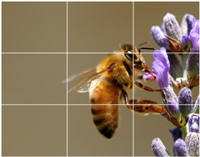
    The rule of thirds is a powerful compositional technique for making photos more interesting and dynamic. It's also perhaps one of the most well known. This article uses examples to demonstrate why the rule works, when it's ok to break the rule, and how to make the most of it to improve your photography.

    Composition - Golden Ratio and Rule of Thirds

    Composition - Golden Ratio and Rule of Thirds

    Design and the Divine Proportion

    Design and the Divine Proportion

    Many design­ers, whether tra­di­tion­ally schooled or not, have trouble with com­pos­i­tion. I’ve sat with plenty of design­ers who simply moves things around until they feel ‘right’. Design is, in essence, com­mu­nic­a­tion (I know, I know, I rant about this enough, but this isn’t one of them) but the vehicle for com­mu­nic­a­tion is the design. One of the key com­pon­ents in the vehicle of com­mu­nic­a­tion is com­pos­i­tion, and in design school­ing it is some­thing that is taught as some­thing you should feel rather than cre­ate logic­ally. This has always bothered me.

    Divine Proportions as Used in Your Paintings

    Divine Proportions as Used in Your Paintings

    I got quite apt at planning out pictures with this classical method as the underpinning for composition. I gained a much better understanding of all the Renaissance, Classical and Baroque Art. Even the Impressionists were steeped in the use of geometrically designed compositions.

    Elements of Design: Proportion and the Golden Ratio

    Elements of Design: Proportion and the Golden Ratio

    The “golden ratio” has fascinated artists and mathematicians for over 2000 years. It’s a mathematical formula observed in nature and used by artists, architects, designers, and even musicians in countless ways.

    Fine Art and the Rule of Thirds : Learn from the Masters

    Fine Art and the Rule of Thirds : Learn from the Masters

    The rule of thirds compositional guideline used in photography has it roots in the fine arts. The first known rule of thirds compositional guideline was introduced around the eighteenth century.

    Golden Ratio in Art

    Golden Ratio in Art

    The golden ratio has been known and used since ancient times. Its most common use by artists is to locate their centre of interest. The lines joining the golden section points of opposite edges of the canvas intersect at a spot that is considered to be the most visually pleasing, the “sweet spot”.

    Golden Proportion in Art Composition

    Golden Proportion in Art Composition

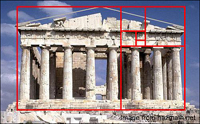
    The ancient Greek civilization studied shapes, patterns, and proportions that existed in the natural world around them and found that, from among them all, that the "Golden Proportion" was the most simple, beautiful, and perplexing of all. Found naturally in plant and animal form it led the Greeks to theorize that the same natural beauty existant in nature should be utilized in manmade creations (art, architecture, music, etc.) if they, too, were to be thought of as beautiful.

    Golden Ratio - The Secret To Aesthetics?

    Golden Ratio - The Secret To Aesthetics?

    This post is for the graphic designers, photographers, architects, and other "form" designers reading my blog. Since discovering & researching the Golden Ratio, I can sincerely say that my aesthetics has improved dramatically! Not to mention (by utilizing some of the tools I'm about to share with you) the improved productivity I have experienced!

    Golden Age and Golden Mean

    Golden Age and Golden Mean

    The Golden Mean is a surprising clue to the proportions of the human body. Just look at the different lengths in your own hand and fingers and forearm, and you can see this yourself. The length of tile first finger joint is to the length of the next two joints as those two are to the length of the whole finger! The length of the middle finger is to the length of the palm as the length of the palm is to the length of the whole hand! The length of the hand is to the length of the forearm as the length of the forearm is to the whole length from fingertip to elbow.

    How to Use the Golden Ratio to Take Better Pictures (Also Applies to Artists & Designers)

    How to Use the Golden Ratio to Take Better Pictures

    Despite many people’s assumption to the contrary, math is undeniably artistic. It takes a tremendous amount of creative muscle and artistry to devise mathematical solutions. And, as made evident by their frequent battles between elegant symmetry and rampant chaos, the traditional fine arts are chock-full of math. Suffice it to say that math and art are intimately related. Today we’re going to take a look at one of these happy relationships and see how the golden ratio that we talked about last time can make you a better photographer.

    How to Get the Divine Proportion/Golden Section into Your Compositions

    How to Get the Divine Proportion/Golden Section into Your Compositions

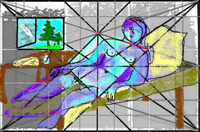
    Now you can instantly draw the golden sections, or other divine proportions, as an aid to composition. This plugin can draw fibonacci sequences such as the golden sections, golden spiral and the golden triangles. In addition it also can draw the harmonious triangles and the rule of thirds - based on composition through identity. The best way to use the plugin is to output the drawing to a transparent top layer you can move around for cropping.

    Laying out a Painting on a Canvas with Golden Section Ratio

    Laying out a Painting on a Canvas with Golden Section Ratio

    As the Golden Section is found in the design and beauty of nature, it can also be used to achieve beauty and balance in the design of art. This is only a tool though, and not a rule, for composition. The Golden Section was used extensively by Leonardo Da Vinci. Note how all the key dimensions of the room and the table in Da Vinci's "The Last Supper" were based on the Golden Section, which was known in the Renaissance period as The Divine Proportion.

    Painting Composition Class: Rule of Thirds

    Painting Composition Class: Rule of Thirds

    The Rule of Thirds is the easiest compositional rule to follow in a painting.

    Painting Problem Solver: Applying the Rule of Thirds

    Painting Problem Solver: Applying the Rule of Thirds

    If there's something about a painting that simply doesn't feel right but you can't figure out just what it is, go back to the basics. Squint your eyes to check the balance of light and dark tones. Identify the major elements in the composition to see how they related to one another, and check if they work with the Rule of Thirds.

    Phiculator : A Tool to Find the Golden Ratio for You

    Phiculator : A Tool to Find the Golden Ratio for You

    Found in art, architecture, design, and most intriguingly, in nature, this ratio has been used throughout history and today for its aesthetic beauty. Phiculator is a simple tool which, given any number, will calculate the corresponding number according to the golden ratio. Useful to anyone wishing to create anything with divine proportions!

    Picture Composition - The Rule of Thirds (or Golden Ratio)

    Picture Composition - The Rule of Thirds (or Golden Ratio)

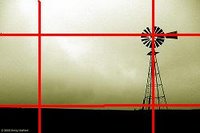
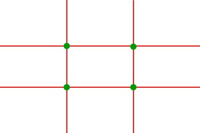
    One of the basic rules of composition is the rule of thirds. This is a very basic rule, that is often ignored by amateurs, and can drastically improve your pictures. Here is how this rule works: imagine that you draw lines across your frame to form a tick-tack-toe playing board. (you should end up with nine identical squares). Now the image is divided to thirds, both horizontally and vertically. See the diagram for lines positions.

    Photography Composition and The Rule of Thirds (Applies to Artists and Designers as Well)

    Photography Composition and The Rule of Thirds (Applies to Artists and Designers as Well)

    There's no doubt that the best way to improve your photography and take better pictures is simply to do it and develop your own eye. But there are a few little principles and guides that can be really useful and help to focus your attention when shooting. I've tried to sweep away all the waffle and jargon, and provide a clear introduction to some basic photography composition principles...

    Photography Composition with Rule of Thirds(Applies to Art as Well)

    Photography Composition with Rule of Thirds

    To increase the expressiveness of your digital pictures, apply the picture composition rules while taking the photos or modeling their edges.

    Rule of Thirds – Composition in Art

    Rule of Thirds – Composition in Art

    The Rule of Thirds is probably one of the most basic rules that has been used in painting for ages. It is a compositional rule of thumb that is commonly used in the visual arts today including painting, photography and design.

    Rule of Thirds

    Rule of Thirds

    Perhaps the most well know principle of photographic composition is the ‘Rule of Thirds‘.

    The Divine Proportion in Design

    The Divine Proportion in Design

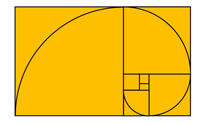
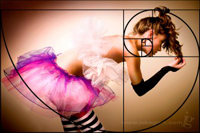
    The Divine Proportion is often represented by the golden spiral. This is the tool used by artists and sculptors to achieve remarkably accurate proportion and aesthetic composition. In the golden spiral, the ratio of the length of the side of each square to the length of the side of the next smallest square is in the golden ratio; the rectangles formed by the combination of squares are golden rectangles; and at every quarter-turn, the spiral gets wider by a factor of Phi.

    The Lazy Rule of Thirds

    The Lazy Rule of Thirds

    can count on one hand the number of rules I will obey without question, based solely on fear of catastrophic consequences: I turn off personal electronics during landing and take-off, I keep my hands inside the ride at all times, I don’t rock vending machines, I resist the urge to climb over zoo fences and I no longer lunge for a police officer’s holstered gun on April Fools Day. Pretty much everything else is up for debate.

    The Rule of Thirds: Why it Works and How to Use it in Your Art

    The Rule of Thirds: Why it Works and How to Use it in Your Art

    There are a number of powerful visual areas within a basic rectangle that artists can use to enhance their compositions. Some of those areas we’ve already talked about in our golden ratio tutorial and in last week’s lesson on rabatment.

    The Golden Ratio and Photographic Composition (Beneficial for Artists and Designers as Well)

    The Golden Ratio and Photographic Composition

    Composition is fundamental to photography. And, if you are like me, it is often problematic. I have tried to follow the “rule of thirds” in most of my compositions, but there are times, especially in landscape photography where the rule simply is not pleasing to my eyes.

    The Golden Ratio and Beauty in Art

    The Golden Ratio and Beauty in Art

    The Golden Ratio has a great impact on art, influencing artists' perspectives of a pleasant art piece. Have you ever wondered why Da Vinci's Mona Lisa looks so beautiful? Da Vinci, a sculpture, painter, inventor and a mathematician, was the first one who first called Phi the Golden Ratio.

    The Golden Ratio in Art and Architecture

    The Golden Ratio in Art and Architecture

    The appearance of this ratio in music, in patterns of human behavior, even in the proportion of the human body, all point to its universality as a principle of good structure and design.

    The Golden Proportion

    The Golden Proportion

    What is common for the beauty of a sculpture, picture, simphony, poem, etc? Is it possible to compare the beauty of the temple to the beauty of a nocturne? It appears it is, provided the unified criteria of beauty are found. Among many proportions there is one having unique properties. This proportion is called: "golden section", "golden ratio", "golden number" and "golden mean"..

    Tutorial: Creating Art Using the Golden Ratio

    Tutorial: Creating Art Using the Golden Ratio

    For centuries artists and designers have used a sum – the golden ratio – to achieve proportion. Here’s how to make it work for you. People studying the golden ratio have found it everywhere from the Pyramids to the Mona Lisa – and even in nature, for example in the veins of leaves. In this tutorial, Roberto Marras shows how to use the golden section in your artwork, to create pieces that work proportionally.

    Illustrator: Golden Section / Divine Proportions

    Illustrator: Golden Section / Divine Proportions

    Have you ever wondered why a profound piece of art is so compositionally pleasing? The artist probably employed the use of the Divine Proportion, which is a phenomenon that suggests that there’s a mathematical equation that’s consistent with the aesthetics of good composition. Let’s examine a brief history of the Divine Proportion and its use over the centuries.

    Proportions in Art

    Proportions in Art

    Proportion is one of the principles of design. This principle works in tandem with the others, creating overall balance and harmony. Some artists and designers have an instinctive ability to combine different proportions which create harmony in their art work.

    Rhythm and Proportions in Design

    Rhythm and Proportions in Design

    Proportion is the relation between elements and a whole. Proportion refers to the relative size and scale of the various elements in a design. The issue is the relationship between objects, or parts, of a whole. This means that it is necessary to discuss proportion in terms of the context or standard used to determine proportions.

    The Divine Proportion

    The Divine Proportion

    All in all, Leonardo believed that the artist must know not just the rules of perspective, but all the laws of nature. The eye, he believed, was the perfect instrument for learning these laws, and the artist the perfect person to illustrate them.

    The Golden Section in Nature

    The Golden Section in Nature

    There are many examples of the Golden Section or Divine Proportion in nature.

    The Divine Proportion

    The Divine Proportion

    Interestingly, dividing two adjacent fibonacci number (8/5 or 21/13, for example) by each other produces increasingly precise approximation of the "Divine Proportion," which we will explore below, as the numbers grow larger.

    The Divine Proportion

    The Divine Proportion

    Any objective observation we make must include a discussion of proportion for it is the rule of proportion in the examination of nature that causes us to observe an organized universe and a universe in chaos, rational and irrational numbers, harmony and discord, truth and falsity. These descriptions are merely proportional effects of the opposition that is inherent in all things.

    The Golden Ratio : Divine Proportion in Mathematics, Art and Biological Systems

    The Golden Ratio : Divine Proportion in Mathematics, Art and Biological Systems

    The Golden Ratio, a Divine Proportion found in mathematics, art and biological systems, is an instrument of measurement and growth efficiency.

    The Power of Proportion

    The Power of Proportion

    So how do you find this special proportion? Divide a straight line in two so that the ratio of the whole length to the larger part is the same as the ratio of the larger part to the smaller part. The result (roughly 1.62 to 1) is the golden ratio.

    Use the Golden Mean to Create a Pleasing Visual Balance

    Use the Golden Mean to Create a Pleasing Visual Balance

    n a nutshell, it is a ratio of two different numbers. A ratio is “golden” if the relationship of the larger to the smaller number is the same as the ratio between the two numbers added together and the larger number. Numerically, the golden ratio is roughly 1.618 to 1. But for your art, you don't need to worry about the exact number. With a ruler and a pencil, you can quickly divide the entire canvas to create a workable basis for your composition designed around the golden ratio.

    Applying Divine Proportion To Your Web Designs (Applies to Setting up Your Art and Drawings as Well)

    Applying Divine Proportion To Your Web Designs

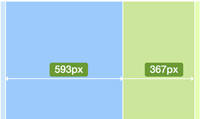
    This article explains what is the Divine proportion and what is the Rule of Thirds and describes how you can apply both of them effectively to your designs. Of course, there are many possibilities. Hopefully, this post will help you to find your way to more effective and beautiful web designs or at least provide some good starting points you can build upon or develop further.


    Privacy Policy .. Contact Us

    SheKnows.com Logo