


Home > Directory of Drawing Lessons > How to Improve Your Drawings > Draw More Confident Lines
Tips for Drawing More Confident Lines & Strokes with the Following Lessons & Tutorials for Kids & Beginners.
|


|
Learning How to Draw Lines with Confidence
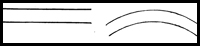
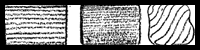
Commence with short horizontal lines, gradually increasing the length, making the line in a distinct, bold, and rapid manner, first from left to right, and then vice versa, thus : next, straight lines touching each other at different angles, thus : lines, thus : then perpendicular. Draw Pen & Ink Line Art with Confidence
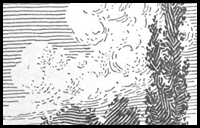
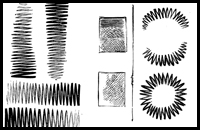
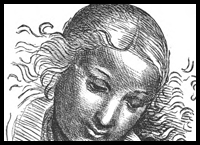
Learn how to draw much confident pen & ink lines / strokes with the following drawing exercies & practice tips and tutorials for drawing variating widths in the same stroke. Drawing Confident Lines and Textures and Shades in Pen and Ink
the linework must be done quickly, easily, and with absolute confidence, or the effect of light grace that is its charm will not be obtained. Use Direction of Pencil Stroke for Better 3-Dimensional Effects
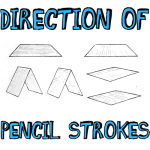
Find out which direction you should draw pencil lines in order to make a better 3d effect. Doodle with Your Pencil for Drawing Confident Lines
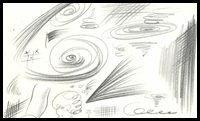
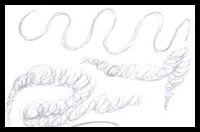
Hold your pencil just enough to guide it, gently but firmly. Begin by scribbling a little with your wrist resting lightly on your board and your hand holding your pencil lightly. Draw loosely, easily, some rhythmic lines on your paper. Drawing Lines Exercises to Make You More Creative and Imaginative
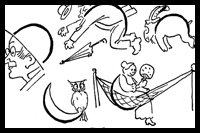
Learn how to become more imaginative and creative with the following drawing and illustration exercises for beginners and kids How to Draw Freehand with Loose Lines
This drawing lessons is to teach you how to sit, where to position your hands, where to look, in order to draw nice loose lines that are important for the freehand style of drawing. Drawing Lights and Shadows with Variety of Lines
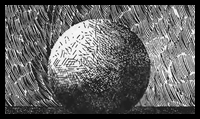
Shadows & Lights by Drawing Lines with Hatching & Crosshatching Shading Lessons & Tutorials for Beginners Techniques for Adding Shadows to Your Drawings
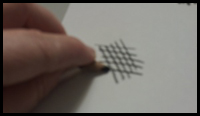
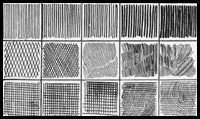
Adding Shadows to your artwork is an art in iteself. This drawing tutorial will help you learn how to shade your drawings with crosshatching, parallel lines, blending and directions of lines. Drawing Freehand Lines Confidently
Of course you can. Use a ruler. When you want to draw anything else, freehand drawing is a matter of habit, observation and practice. Seeing line in three dimensional objects is looking at their edges. Drawing Warm Up Freehand Lines & Strokes Exercises
It's not about the end result as much, it is about the taking part and creating ideas in art, because everyone has ideas within them and as an artist these need to be expressed through the process of art.
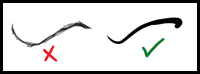
With a bit of practice, drawing in this manner will become easier and the resulting lines in the drawings will flow from thin to thicker to thin with ease—making for a more interesting drawing. Exercises for Drawing Evenly Spaced Loose Lines
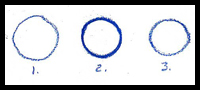
Exercises to Draw Evenly Spaced Lines and Strokes and for Holding the Pencil Correctly
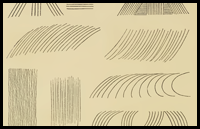
Lines should have no more than 1-2 strokes each. If you want to draw the curve of a deltoid or a bicep... or draw the motion line of a figure... do it with one broad stroke. Part of the fun and beauty of drawing is the feeling of drawing, of following each line. Simple Pen and Ink Line Work Exercises
Practice making more confident lines with the following drawing exercises. Drawing With Different Types of Lines
Listed here are the advantages and disadvantages of the two methods of delineating contour. You can then make your own decision on which type of line is better for you and your artwork. Lines in Your Drawings - The important of lines in the beauty of your art, paintings, and drawings is crucial |

Privacy Policy ..... Contact Us