Drawing Tutorials Side Menu for Easier Navigation
Draw Online with Our Free Drawing Application Tool
Drawing People
Manga and Anime
Drawing Animals
Drawing Objects, Shapes, and Things
Perspective Drawing Lessons
Principlse and Elements of Art
Mediums to Draw With
Drawing Landscapes and Nature
Techniques of Drawing
Drawing Lights and Shadows
Drawing for the Holidays
Adventure Time
Avatar The Last Airbender
Angry Birds
back at the barnyard
Draw Ben 10
How to Draw Bratz Dolls
Captain Underpants
Disney Pixar Cars
Club Penguin
Chowder
Clifford The Big Red Dog
Courage the Cowardly Dog
Baby Cupid
Cut the Rope Om Nom
Danny Phantom
Dexters Laboratory
Doodle Jump
Fairly Odd Parents Characters
Family Guy Characters
Disney Fish Hooks
Fruit Ninja
Flapjack Characters
Garfield Characters
Grim Adventures of Billy and Mandy
Adventures of Gumball
Drawing Halo Characters
Hello Kitty
Invader Zim Characters
Iron Man
Jimmy Neutron
Johnny Bravo
Johnny Test
Kim Possible
Kirby
Kung Fu Panda
Lilo and Stitch
Lego Minifigures
Looney Tunes Characters
Mario Luigi and Super Mario Bros Characters
Mighty B! and Bessie Characters
Mr. Men Characters
Max and Ruby
My Gym Partners a Monkey
Naruto
Phineas and Ferb Drawing Tutorials
Plants Vs Zombies
Pokemon Characters
Powerpuff Girls
The Regular Show
Robo Boy
Draw Rugrats
Samurai Jack
Santa Clause
Scooby Doo Characters
Scribblenauts
Skunk Fu
Sonic Hedgehog
Spiderman
Spongebob Squarepants Characters
Squirrel Boy
Super Man Drawing Lessons
Teen Titans
Drawing The Simpsons
The Smurfs
Star Wars The Clone Wars
Tom & Jerry
Wow Wow Wubbzy
Dora the Explorer
Draw Ed, Edd, and Eddy
Fosters Home for Imaginary Friends
How to Train Your Dragon
Peanuts and Charlie Brown
Penguins of Madagascar
South Park Characters
Drawing The Flinstones
Toy Story Characters
Winnie the Pooh
Marvel XMen Characters
Drawing Transformers
Legend of Zelda
Bleach (Anime / Manga Show)
Death Note (Anime / Manga)
Digimon
Dragonball Z
Fruit Basket (Anime / Manga)
Unuyasha
Kingdom Hearts
Ragnarok (Manga & Anime)
Strawberry Panic
Sailor Moon (Anime & Manga)
Tench Muyo (Manga & Anime)
Urusei Yatsura (Anime & Manga)
Yu-Gi-Oh (Anime & Manga)
Drawing Proportional Human Figures
Drawing Human Faces & Heads
How to Draw Babies & Toddlers
Drawing Kids and Children
Drawing Crowds and Groups of People
Drawing Hands
Drawing Human Backs
Upper Torsoes & Chests
Draw Legs & Feet
Drawing Necks & Throats
Figures in Motion and Movement
Drawing Figures in Nature & Landscapes
Draw Eyes
Drawing Noses
Draw Mouths, Lips, and Teeth
Draw Hair
Draw Ears
Drawing Facial Expressions
Drawing People Kissing
Hugging and Hugs
How to Capture a Persons Likeness
Drawing Portraits with Portraiture
Drawing Old Peoples Wrinkles from Age
Drawing Clothing & Wrinkles
Drapery and Folds
Choosing Subject Matter or Your Art
Rule of Thirds and Divine Proportions
How to Improve Art Compositions
Elements of Lines in Art Compositions
Elements of Movement Used in Good Art Compositions
Elements of Shape
Elements of Space in Art
Principle of Balance in Art Composition
Principle of Contrast in Composition
Principles of Emphasis in Art Composition
Unity and Harmony in Art Composition
Rhythm and Patterns in Art Composition
Negative Space
Focal Points and Centers of Interest in Art
Elements of Proportions in Good Art Composition
Textures in Art Compositions
Tones & Values in Art Composition
Elements of Variety
Drawing with Colored Pencils
Drawing with Conte Crayons
Drawing with Charcoal Medium
Drawing with Markers
Drawing with Pastels
Drawing with Pencils
Drawing with Pen and Ink
Drawing Exercises
Burnishing Paper
Hatching & Crosshatching
Scumbling
Shading and Blending
Stippling
Lessons for Begginers
Blocking-In Method of Drawing
Common Mistakes and Troubleshooting
Photo-Realistic Drawings
Drawing Confident Lines
Observational Drawing & Drawing What You See
Figure Drawing
Freehand Drawing Skills
How to Hold Your Pencil Correctly
Drawing Scenery, Backgrounds, & Interiors
Estimating & Measuring Proportions & Sizes & Angles
Drawing from Memory
Nature Landscape Drawing
Perspective Drawing Lessons
Preparing to Paint with Sketching Out Ideas
Drawing with the Right Sight Size Method
Drawing Still Life
Observational Drawing & Drawing What You See
Figure Drawing
Adding Tones and Values to Your Drawings
Drawing Lights and Shadows
Hatching & Crosshatching
Drawing Reflected Light
Shading and Blending
Stippling
Art Projectors
Camera Lucida
Camera Obscrua
Drawing with Grids
Tracing Images with Light Boxes
Transferring and Copying Drawings
Halloween Drawing Lessons
Christmas & Winter Drawing Lessons
Drawing Valentines Day Tutorials
Drawing Figures in Nature & Landscapes
Nature Landscape Drawing
Perspective Drawing Lessons
Drawing Still Life
Drawing Flowers & Plants
Drawing Landscapes and Nature
Drawing Sky and Clouds
Drawing Trees & Leaves & Branches
Drawing Outdoors & Travel Sketching
Crocodiles & Alligators
Drawing Bears
Drawing Birds
Drawing Dogs
Drawing Bunny Rabbits
Drawing Camels
Drawing Chickens and Roosters
Drawing Cows
Drawing Deer, Buck, Does
Drawing Dragons
Drawing Ducks
Drawing Frogs
Drawing Giraffes
Drawing Goats
Drawing Hippos
Draw Kangaroos
 Koala Bears
Drawing Sheep adn Lambs
Drawing Lions
Drawing the Octopus
Drawing Opossums
Drawing Owls
Drawing Parrots
Drawing Peacocks
Drawing Penguins
Drawing Pigs
Drawing Reindeer
Drawing Rhinos
Drawing Seahorses
Drawing Squirrels
Drawing Snails
Drawing Swans
Drawing Whales
Drawing the Walrus
Drawing Still Life
Perspective Drawing Lessons
Drawing Geometric Shapes
Drapery and Folds
Drawing Fire Flames
Drawing Hearts
Drawing Stars
Drawing Perfect Circles
Drawing Cubes
Drawing Cones
Drawing Cylinders & Tubes
Drawing Ovals & Ellipses
Drawing Geometrical Planes
Drawing Prisms
Drawing Pyramids
Drawing Spheres & Balls
Drawing Bells
Drawing Gifts & Presents
How to Add Color to Manga & Anime Drawings
Basic Anime & Manga Drawing Tips
Drawing Chibis
Drawing Anime Bodies
Anime Women and Girls
Drawing Boys and Men in Manga and Anime Style
Drawing Hair for Manga & Anime Characters
Drawing Anime & Manga Mouths
Creating Anime and Manga Characters
Drawing Anime & Manga Kids
Drawing Anime & Manga Clothing
Drawing Manga and Anime Hands
Drawing Anime / Manga Ears
Drawing Manga & Anime Eyes
Drawing Faces & Heads in Manga Style
Drawing Facial Expressions in Manga and Anime Styled Illustration
Drawing Manga Stories and Pages
Drawing Anime Manga characters in their Poses
Shading Anime and Manga Drawings
Perspective Drawing Lessons
One Point Perspective Drawing Lessons
Two Point Perspective Drawing Lessons
Three Point Perspective Drawing Lessons
Multiple Points Perspective / Curvilinear Perspective
Foreshortening
Aerial and Linear Perspective
More Drawing Lessons

  •   New Drawing Lessons


      How to Draw Perry the Platypus Agent P from Phineas and Ferb How to Draw Pikachu from Pokemon
    Spacer How to Draw Spongebob Squarepants How to Draw Gary the Snail from Spongebob Squarepants


    Home >Directory of Drawing Lessons > How to Improve Your Drawings > Methods of Measurement > Drawing the Sight-Size Method

    SIGHT-SIZE DRAWING METHOD OF MEASURING SUBJECTS : How to Use the Sight-Size Technique to Create More Realistic and Accurate Drawings

    How to Draw Perfect Hearts for Valentines Day How to Draw Cupid
    How to Draw Pepe Le Pew How to Draw Tom and Jerry

    | More

    transparent gif for spacing

    Drawing with the Sight-Size Method

    Drawing with the Sight-Size Method

    The Sight Size Method is a method of constructing realistic drawings with great accuracy that has been used to draw and teach drawing for centuries. It is a method by which anyone with any amount of drawing experience can set up and execute a realistic drawing. I will describe the method in terms of drawing on this page, but the method it can be used for drawing or painting and can be applied to portraits, figures, a still life, a cast, or any stable scene.

    First Cast Drawing Using Bargue Method of Drawing Schematics

    First Cast Drawing Using Bargue Method of Drawing Schematics

    I'm following the progression of the Bargue plates with this: schematics, then line, then tone. The intention is that the last drawing of the series will be a properly finished cast drawing, at which point I'll have had nine practice runs, adding a little more each time.

    Sight-Size Drawing and Painting

    Sight-Size Drawing and Painting

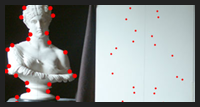
    The procedure is to stand a measured distance away from both the easel and the subject being painted so that both appear to be exactly the same. That is, from 10 or 12 feet away from a painting, the image appears to be exactly the same size as the person or object being painted.

    Sight-Size Drawing Approach

    Sight-Size Drawing Approach

    The traditional way to learn Sight-Size is through cast drawing (at least in modern day ateliers). Darren Rousar's book, Cast Drawing Using the Sight-Size Approach fully explains the Sight-Size process but we thought it best to present a very short preview here. More detail is also provided in the cast drawing section. What follows applies equally well for most subjects (not only cast work) when drawing, painting or sculpting.

    Sculpture and the Sight-size Technique

    Sculpture and the Sight-size Technique

    Sight-size is a simple and supremely logical way of reproducing nature in art. Its method implies that both the artist's eyes and the model from which the artist works are essential, complex tools, requiring skill and practice for effective use.

    Sight-Size Method

    Sight-Size Method

    Professional painters will in time, develop an ‘eye’ that precludes the need for measuring devices and plumb lines, but the observation method itself is not abandoned - instead it becomes second nature. Sight-size can be taught and applied in conjunction with a particular sensitivity to gesture to create life-like imagery; especially when applied to portraiture and figurative works.

    Sight-size in Landscape Painting

    Sight-size in Landscape Painting

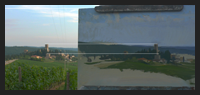
    This is just a quick post to help better explain to my weekend landscape students the principle behind using the sight-size method for plein air sketching. In the photo above you can see how the camera was held in a position where the subject is the exact same size in nature as the painting on the panel.

    Sight Size Method of Drawing

    Sight Size Method of Drawing

    One goal of some 2-dimensional artists is to try to create the illusion of 3-dimensions on their flat surface. It is done with tone, the relative range of a color from lights to darks.

    Sight-Size Misconceptions

    Sight-Size Misconceptions

    Now and then I get e-mails from people who are asking for more Sight-Size background information. Occasionally some also have opinions about Sight-Size that they would like my perspective on. This document is a compilation of my answers.

    Sight Size Method Exercise

    Sight Size Method Exercise

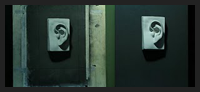
    The photograph at the right shows an example of the first exercise the students do when they enter the atelier. The student sets up a model, as closely as possible to a drawing board, taking care not to move the model or the board throughout the course of the exercise. T

    Technique: Tim McGuire: Sight-Size Demonstration

    Technique: Tim McGuire: Sight-Size Demonstration

    View a step-by-step demonstration of the sight-size method discussed in "Ryan S. Brown: Training Clarifies the Truth of One's Perceptions" in the winter 2006 issue of Workshop magazine.

    Technique of the Week: Sight-Size Method

    Technique of the Week: Sight-Size Method

    Sight-size drawing and painting is a method by which a student with any amount of drawing experience can set up and execute a “realistic” drawing. Eventually, as a result of engaging in this method and process over time, the artist’s ability to create realistic and accurate drawings is increased. Many argue that the sight-size method trains the eye to perceive finer and finer deviations in form between the subject and drawing.

    The Lazy Man's Approach to Sight Size

    The Lazy Man's Approach to Sight Size

    For today's post I'm going to explain the set up for the final version of the iron painting. It's a bit convoluted, but hopefully I'll be able to get it across with the help of a view photos. It seems ny still life set ups have become increasingly complicated as I've tried to solve a series of problems and to evolve a repeatable working process.

    The Sight-size Method and its Disadvantages

    The Sight-size Method and its Disadvantages

    The sight-size method is a popular and commonly used method of teaching students how to draw and paint realistically from life. I was trained to use the sight-size method and subsequently taught it to students in the academy where I received my training, as well as in my own studio and academy.

    Atelier Method - The Atelier Method is a method of fine art instruction modeled after the private art studio schools of 15th to 19th century Europe. Taking its name from the French word for "artist's studio," the Atelier Method is a form of private instruction in which an artist, usually a professional painter, works closely with a small number of students to progressively train them.

    Concerning the Sight-size Method (PDF) - The sight-size method is a popular and commonly used method of teaching students how to draw and paint realistically from life. I was myself trained to use the sight-size method and subsequently taught it to students in the academy where I received my training, as well as in my own studio and academy

    Drawing: The Benefits of Sight-Size Drawing - In the winter 2006 issue of Workshop magazine, we presented an excerpt from "The Benefits of Sight-Sized Drawing" from the November 2005 issue of American Artist. Here, we present the complete text of the article about California artist Tim McGuire.

    Information Sheet on Drawing Figures Using the Sight-Size Method - Applying sight size to a drawing is a good way of disciplining the eye. Acquiring a 'good eye' enables you to assess shape and proportion almost instinctively which is of great value to a painter. Do not become a slave to the method though or your drawing may become tight but apply sight size checks from time to time to make sure your eye is performing well.

    Sight Size Method - The sight-size method has been a staple of academic drawing and painting since antiquity, first utilized by the ancient Egyptians in the Old Kingdom. The sculptor Thutmose and his under-artists certainly used it and may have even used it for the famous bust of Nefertiti (Amarna stylistics notwithstanding). The sight size method was surely used by the best of the encaustic mummy portraitists of the Greek and Roman Egyptian period.

    ::::::::::::::::::::::::::::::::::::::::::::::::::::::::::::::::::::::::::::::::::::::::::::::::::::::::::

    You Might Also Enjoy : Techniques for Measuring Size and Angles ... Rule of Thirds .... Drawing with Grids

    ::::::::::::::::::::::::::::::::::::::::::::::::::::::::::::::::::::::::::::::::::::::::::::::::::::::::::


    Privacy Policy .. Contact Us

    SheKnows.com Logo