![]() |
![]() |
||
![]() |
![]() |
||
Home >Directory of Drawing Lessons > How to Improve Your Drawings > Methods of Measurement in Drawing
MEASURING METHODS IN DRAWING FOR CORRECT PROPORTIONS AND ANGLES : How to Measure Subjects & Models for Proportional Portraits and Other Art Work
|
|
You Might Also Enjoy : Drawing with the Right Sight Size Method ... Rule of Thirds .... Drawing with Grids How to Find Measurements, Angles, Proportions with Pencil and Thumb Method
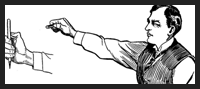
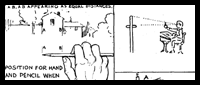
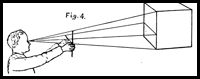
You can estimate proportions and then check them with a fair degree of accuracy by employing what is called the thumb-and-pencil method of finding proportions. This is done by simply placing your pencil or pen in your hand and then holding it at arms length between your eye and the object that you plan to draw. Finding Out the Size, Proportions, and Angle of Subjects & Figures with the Rule of Thumb Technique
Learn how to use the Rule of Thumbs Method of measuring the size, proportion, and angle of the subject or figure that you are drawing with the following drawing tutorial. Judging the Approximate Angles & Slants of Objects Edges
Artist Techniques for Approximating the Angle and Slant of Lines & Edges of Objects & Subjects that You are Drawing Judge the Size & Proportions of Models by Using Pencil Thumb or String
Judging the Size, Distance, Proportions and Angle of Objects thtat you are drawing by using the Pencil Thumb & String Methods to Help You Guess Proportions of Things and People that You Draw. How to Measure the Proportions of a Model or an Object that You are Drawing
Learn how to draw the proportion of a model or object with easy methods. Distance and Proportions : Measuring Like An Artist Drawing Lesson
If art were like most subjects, a drawing lesson might consist of us measuring distances and the proportions of the things we are painting with a tape measure or a yard stick. In most cases, using these devices is very impractical for the kinds of subjects an artist wants to paint. Drawing Lesson: Seeing and Measuring for Accuracy
In this first drawing lesson, I just want to go over some ways that you can get your drawing as accurate as possible without having to go overboard with the measuring. There are some basic things you will want to be able to "see" in order to get everything positioned correctly and in the correct proportion. Drawing Martin Luther King Jr. with Tick Marks Measurement Method
If you're putting together a flyer, a poster, a lesson plan or an article about Martin Luther King, Jr. for Martin Luther King Jr. day, you may need a copyright-free image of this famous historical figure. While many photos are available online and in books, the copyright belongs to other people. By creating your own artwork, you can reproduce it, make prints, sell copies to fund your tribute and do anything you like with it to perpetuate the memory of this great man.
Once you have mastered the drawing tips I shared on proportion and alignment (the first two elements of the block-in process), learning how to measure angles will enhance your accuracy in drawing still further. Using the technique on this page you will be able, with some practice, to eyeball angles (or slants) and draw them accordingly. Figure Drawing Proportions : Judging Angles
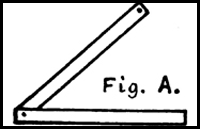
Learn about the A Simple Aid to Accurate Drawing. An alternative method, handy for smaller detail within the page, is using two pencils as a sort of protractor. This is an excellent way of minimising error and ensuring a correctly proportioned figure. How to Paint a Gift Portrait with Tick Marks
I put grid coordinates across the top and right side of my picture area and my photo reference, then measured from the top and one side to where a dark spot meets light, like the corner of one eye. I made a tick mark at the same measured place on my art paper -- a very small dot put on the shadow side of where it belonged. How to Sketch Out and Measure Out Proportions with Tick Marks
Tick Marks is still a perfectly good way to do realistic drawing. It's slow. When I started out, I used several hundred tick marks to get a realistic portrait rendering and then started connecting dots with areas of shadow in different values. Learn How to Draw Proportions by Measuring
It might seem a bit inartistic to spend so much time measuring ratios, especially if you are accustomed to jumping right into a drawing. That's normal; I had the same struggle when I took drawing lessons. Anybody can do this, however...including you!
This lesson will deal with learning how to create a unit of measurement. You will use your pencil to measure and draw a still life which will be set up in front of you. In the first drawing by Honore Daumier you can see that the practice goes back many hundreds of years. People still use it, because it works. Measuring Geometric Shapes Accurately
Learn how to draw geometric shapes accurately by using your pencil as a measuring tool.
A strategy to determine distances and sizes in the motive is to set an easy to measure length of the motive into relation to other lengths. Measuring Techniques of Artists for Finding Correct Proportions
Just make a habit of marking those guidelines on any blank page before you start. They are very useful and they will give you a basis for several different ways of measuring proportion on anything you draw. Anything.
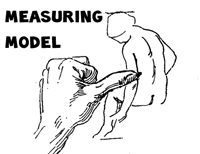
Before we go on to the next exercise let's talk about another skill that is absolutly vital to know - measuring. Proportions in Figure Drawing : Measuring the Model
Using this method, it is important to stand in the same place, and to keep your head as still as possible when measuring, and to extend the arm fully with elbow straight, each time a measurement is made. You should not be too close to the model. The Divider, Another Measuring Tool
The divider is another measuring tool, along with the straight edge, that is invaluable in making sure that our pictures have the correct proportions. 3 Easy Steps To Measuring And Proportions In Figure Drawing - I like to know these formulas and use them as a guide. The human form being so individual you can never go strictly off of these formulas alone. As an artist, its important to know these formulas to be able to recognize the deviations from the formulas in the model/subject you are drawing. Drawing to Scale - The whole idea behind creating scale drawings is to allow the drafter to create a drawing which is proportionately the same as the artifact it represents. Using a measuring device called a scale, we can create accurate drawings of both very large objects or very small objects and fit either on a standard size piece of paper. How to Use a Pencil to Measure in Drawing - When drawing, you can figure out the proportional relationship between one object and another by using your pencil as a measuring device. The method will not provide exact measurements, but it is an easy, practical tool that you can use to approximate proportion. How To Draw With Models, Measurement, and Proportion - Drawing by copying is useful for beginners. It lets one practice style and methods of drawing without being concerned about the exact subject matter. Accuracy in eye measurement comes with copying. Improve Your Figure Drawing - Simple Methods for Easy Measuring and Proportions - If you're a developing artist, chances are the word 'proportion' makes you at least mildly distressed, if not crying out in anguish trying to figure it out. It doesn't have to be that way though. In this article, you will learn uncomplicated, pain-free ways to measure your proportions and improve your figure drawings immensely. Judging Proportions in Drawing - Have you ever wondered what artists were doing when they peered over an outstretched pencil at a subject? This strange-looking practice is a very useful method of measuring the sizes and angles of the subject by using your pencil as a ruler, and establishes a more accurate drawing. These aren’t absolute measurements—rather you are looking at the relative proportions. Proportions and Measuring in Drawing Faces and People Made Simple! - I like to know these formulas and use them as a guide. The human form being so individual you can never go strictly off of these formulas alone. As an artist, it's important to know these formulas to be able to recognize the deviations from the formulas in the model/subject you are drawing. :::::::::::::::::::::::::::::::::::::::::::::::::::::::::::::::::::::::::::::::::::::::::::::::::::::::::: You Might Also Enjoy : Drawing with the Right Sight Size Method ... Rule of Thirds .... Drawing with Grids ::::::::::::::::::::::::::::::::::::::::::::::::::::::::::::::::::::::::::::::::::::::::::::::::::::::::::
|